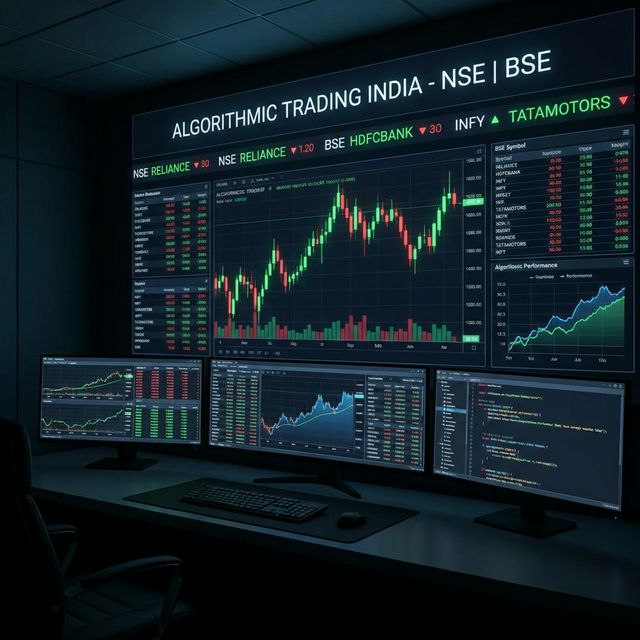
Why Risk Management is Crucial in Algorithmic Trading
- John Doe
- Risk Management, Algorithmic Trading
- 11 Feb, 2026
Algorithmic trading promises speed, efficiency, and emotion-free execution. But without proper risk management, even the most sophisticated algorithm can wipe out your capital in minutes. In this guide, we'll explore why risk management is the cornerstone of successful algo trading and how to implement it effectively.
The Dark Side of Algorithmic Trading
Algorithms execute trades at lightning speed—which is both their greatest strength and biggest danger. A single bug, market anomaly, or flash crash can trigger catastrophic losses before you even realize what's happening.
Real-World Disasters
- Knight Capital (2012): A faulty algorithm caused $440 million in losses in 45 minutes
- Flash Crash (2010): Algorithmic trading contributed to a 1,000-point Dow Jones drop in minutes
- Individual Traders: Countless retail traders have lost entire accounts due to over-leveraged, unmonitored algorithms
The lesson? Risk management isn't optional—it's survival.
Core Principles of Algo Trading Risk Management
1. Stop-Loss Orders: Your Safety Net
A stop-loss automatically exits a trade when losses reach a predefined threshold. In algorithmic trading, stop-losses must be:
- Automated: Hardcoded into your algorithm
- Non-negotiable: Never override or disable them
- Dynamic: Adjust based on volatility (use ATR-based stops)
Example:
# Pseudo-code for ATR-based stop-loss
atr = calculate_atr(period=14)
stop_loss_distance = 2 * atr
entry_price = 100
stop_loss_price = entry_price - stop_loss_distance
2. Position Sizing: Never Risk More Than 2%
Position sizing determines how much capital to allocate per trade. The golden rule:
Never risk more than 1-2% of your total capital on a single trade.
Formula:
Position Size = (Account Size × Risk %) / Stop-Loss Distance
Example:
- Account Size: ₹1,00,000
- Risk per Trade: 2% (₹2,000)
- Stop-Loss Distance: ₹10 per share
- Position Size: ₹2,000 / ₹10 = 200 shares
3. Drawdown Control: Know When to Stop
Drawdown is the peak-to-trough decline in your account. Algorithms should have:
- Daily Loss Limit: Stop trading if losses exceed X% in a day
- Monthly Drawdown Limit: Pause algorithm if monthly losses exceed Y%
- Kill Switch: Manual override to halt all trading instantly
Example:
if daily_loss > account_size * 0.05:  # 5% daily loss limit
    halt_trading()
    send_alert("Daily loss limit reached")
4. Diversification: Don't Put All Eggs in One Basket
Spread risk across:
- Multiple Strategies: Trend-following + mean reversion
- Multiple Assets: Stocks, forex, commodities
- Multiple Timeframes: Scalping + swing trading
5. Leverage Control: The Double-Edged Sword
Leverage amplifies both gains and losses. For algorithmic trading:
- Beginners: Max 1:2 leverage
- Intermediate: Max 1:5 leverage
- Advanced: Max 1:10 leverage (with strict risk controls)
Never use maximum available leverage.
Common Risk Management Mistakes
❌ Over-Optimization (Curve Fitting)
Tweaking parameters to perfectly fit historical data creates algorithms that fail in live markets.
Solution: Use out-of-sample testing and forward validation.
❌ Ignoring Slippage and Commissions
Backtests often assume perfect execution. Real trading has:
- Slippage (price difference between order and execution)
- Brokerage fees
- Exchange charges
Solution: Include realistic transaction costs in backtests.
❌ No Monitoring
"Set and forget" is a myth. Algorithms need continuous monitoring for:
- Technical failures (API disconnections)
- Market regime changes (trending → ranging)
- Black swan events (geopolitical shocks)
Solution: Set up real-time alerts and daily performance reviews.
❌ Emotional Overrides
Disabling stop-losses or increasing position sizes after losses is a recipe for disaster.
Solution: Trust your algorithm. If it's not working, pause and analyze—don't tweak mid-crisis.
Building a Risk Management Framework
Step 1: Define Your Risk Tolerance
- Maximum acceptable loss per trade: 1-2%
- Maximum daily loss: 5%
- Maximum monthly drawdown: 10%
Step 2: Implement Automated Controls
- Stop-loss orders
- Position sizing calculator
- Daily/monthly loss limits
- Kill switch mechanism
Step 3: Backtest with Realistic Assumptions
- Include slippage (0.05-0.1%)
- Include commissions (₹20 per trade)
- Test across multiple market conditions (bull, bear, sideways)
Step 4: Monitor and Adjust
- Daily P&L review
- Weekly strategy performance analysis
- Monthly risk metric evaluation (Sharpe ratio, max drawdown)
Risk Metrics Every Algo Trader Must Track
| Metric | Description | Target |
|---|---|---|
| Sharpe Ratio | Risk-adjusted returns | > 1.5 |
| Max Drawdown | Largest peak-to-trough decline | < 20% |
| Win Rate | % of profitable trades | > 50% |
| Risk-Reward Ratio | Average win / Average loss | > 2:1 |
| Profit Factor | Gross profit / Gross loss | > 1.5 |
Conclusion: Risk Management is Your Edge
In algorithmic trading, survival comes first, profits second. The best algorithm in the world is worthless if it blows up your account.
Key Takeaways:
- Always use stop-losses
- Risk only 1-2% per trade
- Implement daily/monthly loss limits
- Monitor continuously
- Diversify strategies and assets
Master risk management, and you'll join the 10% of algo traders who consistently profit. Ignore it, and you'll become a cautionary tale.
Trade smart. Trade safe. Trade algorithmically—with discipline.